Review: Paper Cutting Flower Template Floral for Embroidery
As a designer who spends half my life digitizing and the other half stitching, I have learned to look past the glossy preview images. We all know that what looks crisp on a screen can sometimes turn into a tangled mess of thread on fabric. When I first opened the Paper Cutting Flower Template Floral, my initial reaction was one of cautious optimism. The aesthetic is undeniably charming, borrowing heavily from the intricate world of paper crafts, but my job is to determine if this Graphics asset translates well into the tactile reality of a machine embroidery design.
First Impressions and Visual Personality
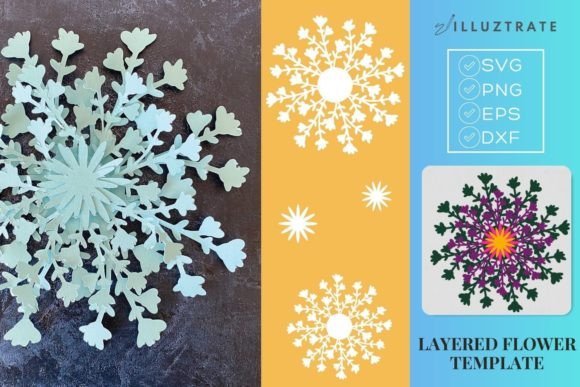
The design carries a delicate, vintage-inspired mood. It feels less like a bold statement piece and more like a subtle accent that adds sophistication without shouting. The shapes are organic yet structured, mimicking the layered look of cut paper. For those of us in the Crafts industry, this visual language is trending heavily right now. However, seeing it as an embroidery file requires a different eye. I immediately looked for potential trouble spots: tiny isolated details that might not hold up under the needle, and areas where the stitch density might become too heavy for lightweight fabrics.
This is not a design that relies on complex satin stitch borders or dense fill stitch backgrounds. Instead, it appears to lean toward cleaner lines, which is a relief. In my experience, designs that mimic paper cuts often suffer when converted to embroidery if the digitizer tries to force solid fills into thin spaces. If this template maintains its open, airy structure in the final stitched version, it will be versatile. If it becomes a block of thread, it will lose its charm.
Real-World Application: The Tote Bag Test
To truly evaluate this, I imagined a specific client project: a custom order for a local boutique selling eco-friendly goods. The request was for a series of tote bag design options that felt handmade but professional. I pictured the Paper Cutting Flower Template Floral placed centrally on a natural canvas tote.
In this scenario, the design shines. Canvas provides the stability needed for detailed work. The floral motif would act as a focal point, drawing the eye without overwhelming the utility of the bag. For an Etsy seller or small shop product line, this kind of imagery sells because it feels personal. It suggests care and attention to detail. When a customer sees this on a finished product, they aren’t just buying a bag; they are buying a piece of art. The key here is thread choice. Using matte cotton threads rather than shiny polyester would enhance the "paper" illusion, making the embroidery look more like an applied craft element.
Apparel and Home Decor Considerations
Beyond totes, I considered how this would perform on custom apparel. A sweatshirt embroidery project using this design could be stunning if placed on the chest or sleeve. However, sweatshirts are thick and textured. I would advise testing the design on scrap fabric first to ensure the details don’t get lost in the fleece. For a smoother surface, like a high-quality t-shirt or a linen apron, the clarity of the design would be much higher.
For home decor, think about pillow covers or tea towels. On a kitchen towel, this floral template could serve as a beautiful corner accent. It fits the "cottagecore" aesthetic that remains popular among makers and creative entrepreneurs. However, remember that towels undergo frequent washing. The durability of the stitch-out is crucial. If the design has many jump stitches or loose ends, it may unravel over time. Always check the backing and trim carefully.
Technical Challenges and Fabric Choices
While the design is beautiful, it is not without risks. The primary concern with any intricate floral template is the hoop size and the scale. If you attempt to shrink this design too much for a small embroidered patch or a baby’s hat, the fine lines may merge. This is where understanding your machine’s capabilities is vital.
I would caution against using this on highly stretchy fabrics without a robust stabilizer. The integrity of the "cut paper" look depends on precise spacing between elements. If the fabric shifts during stitching, those gaps close up, and the design loses its definition. Similarly, on dark fabrics, you must ensure high contrast. A light-colored thread on black fabric works, but if the design relies on subtle shading, it might disappear. Always test your thread colors in a black-and-white mockup before committing to the final stitch.
Another critical area is curved surfaces, such as caps. While cap embroidery is lucrative, the curvature distorts flat designs. This floral template, with its symmetrical balance, might look skewed if not centered perfectly on the cap’s front panel. It is better suited for flat items like baby embroidery projects on onesies, provided the size is appropriate for the garment.
Commercial Viability and Branding
For commercial embroidery professionals, the value of this design lies in its versatility. It can be used for holiday embroidery gifts, wedding favors, or personalized products. Because it feels artisanal, it elevates the perceived value of the item. Customers are willing to pay more for items that look hand-crafted, even if they are machine-made.
However, you must verify the licensing. The product description mentions it is designed for craft programs like Silhouette and Cricut, which suggests it may originally be an SVG cut file. If you are converting this into an applique design or using it as a reference for digitizing your own digital embroidery file, ensure you have the rights to do so. Many design assets sold as graphics do not automatically grant commercial rights for embroidered goods. Always read the fine print to protect your craft business.
Final Designer Notes
Before you launch this into your next embroidery project, take these practical steps:
- Test on Scrap: Never skip the test stitch. Use the same fabric and stabilizer combination you plan to use for the final product.
- Check Density: Ensure the stitch count isn’t too high for delicate fabrics. If it is, consider resizing or simplifying.
- Contrast Matters: Verify that your thread colors stand out against the fabric texture. Low contrast kills detail.
- Stabilizer Selection: Use a cut-away stabilizer for stretchy fabrics and tear-away for stable woven fabrics to maintain the design’s shape.
- Licensing Check: Confirm if the license allows for selling finished physical goods or if it is for personal use only.
In conclusion, the Paper Cutting Flower Template Floral offers a lovely aesthetic that fits well within the current market trends for handmade and boutique items. It requires careful handling regarding scale and fabric choice, but with the right preparation, it can produce stunning results for personalized gift lines and small business merchandise. It is a tool that rewards patience and technical precision, offering a bridge between digital graphics and tangible textile art.